

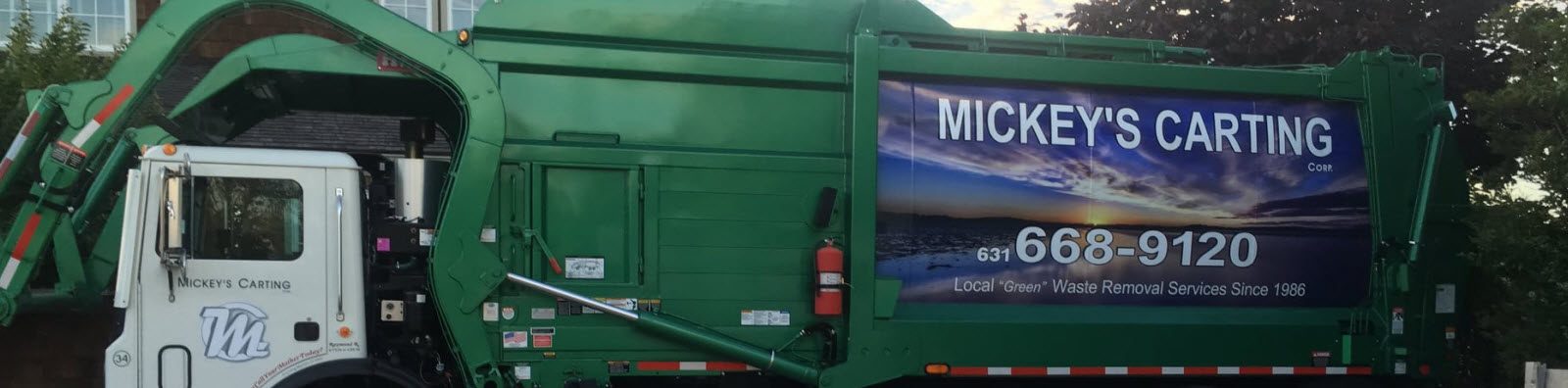




When it comes to container rentals, choosing the right type of container can make a significant difference in efficiency, safety, and cost. Businesses and homeowners alike often face the question: should I go with a front load or a rear load container? In this blog post, the experts from Mickey’s Carting provide a better understanding about the distinctions between these two options, as well as their ideal use cases, and how it will help you make the best decision for your project.
Understanding Front Load Containers
Front load containers are designed with lifting mechanisms on the front of the container. Typically, these containers are serviced by commercial garbage trucks equipped with forks or hydraulic arms that lift and empty the container. They are ideal for large-scale waste management needs, such as in commercial properties, apartment complexes, or industrial sites where frequent pickups are necessary. The front load design allows for quick and efficient waste removal, minimizing downtime and ensuring that the area remains clean and organized.
Understanding Rear Load Containers
Rear load containers, on the other hand, are loaded from the rear of the container. These are more common for residential or smaller-scale commercial applications. They are often emptied using specialized rear-loading trucks, and their design allows for easy access from the back, which can be particularly useful in tighter spaces or areas where maneuvering a large vehicle is challenging. Rear load containers tend to be more versatile in placement and can accommodate a wider range of waste types, including bulky items that might not fit easily into front load containers.
Comparing Efficiency & Accessibility
The choice between front and rear load containers often comes down to efficiency and accessibility. Front load containers shine in high-volume, high-turnover situations because trucks can quickly lift, empty, and return them. They are particularly useful in locations where space allows for the placement of multiple containers for ongoing waste management. Rear load containers, while slightly slower to service in bulk, offer greater flexibility for smaller properties or locations where access is restricted. Their design makes them easier to load manually, making them a good fit for projects with varied waste types.
Cost Considerations
Cost is another factor that influences the decision. Front load containers typically involve a higher rental cost due to their commercial-grade construction and the efficiency they provide. Rear load containers, by contrast, often come at a lower price point and are a practical choice for short-term projects or residential cleanouts. Additionally, the frequency of pickup and the type of waste being disposed of can affect overall cost-effectiveness, so it’s essential to assess your needs carefully before committing.
Waste Management & More in Amagansett, Aquebogue, Baiting Hollow, Calverton, Cutchogue, East Hampton, East Hampton North, Greenport, Jamesport, Laurel, Mattituck, Montauk, Nassau Point, Northville, Northwest Harbor & Riverhead in East End of Long Island, New York
Ultimately, the best container rental for your project depends on the type of waste, the volume, and the logistics of the location. Front load containers are ideal for large, ongoing commercial operations, while rear load containers offer flexibility and convenience for smaller-scale or residential projects. By understanding the strengths of each option, you can ensure your waste management process is both efficient and cost-effective, keeping your project running smoothly from start to finish. To ensure you make the right choice, call the professionals at Mickey’s Carting to help you decide which is right for you. Call today!
